

The Seventh Seat®
Six strangers arrive knowing nothing.
Not who the other guests are.
Not who the chef is.
Not what food is on offer.
Not what the night will bring.
They arrive wearing sunglasses. They take their seats without even seeing one another’s eyes. Once everyone is seated, the host gestures for them to remove their glasses.
And suddenly, the room changes.
For the first time, they can properly look at one another. Eye contact begins. Faces become readable. Voices now belong to people. First impressions start forming.
Then the food begins to arrive. The chef is revealed. Conversation starts moving. A question leads somewhere unexpected. Someone says something that changes the direction of the table. Points of recognition begin to appear where none were obvious before. And the audience is discovering everything with them.
There is no need to manufacture the tension. It is already there in the uncertainty, the first impressions, the disclosures, and the slow realisation that the person opposite may not be who you first imagined.
That is the tension of The Seventh Seat.
The chef matters. The food matters. The host matters. But the story emerges from what happens when six very different lives occupy the same table long enough to become more than first impressions. And every new table can ask a different human question.
Six people who started again.
Six people who walked away from the lives expected of them.
Six people who were told they would never make it.
Six people whose lives changed in one moment.
Six people from completely different worlds connected by an experience none of them expected to share.
The table remains. The people change. The food changes. The culture changes. The question changes. The format travels everywhere. From Melbourne to Delhi, Tokyo, Singapore, London or New York, it brings different people, cultures and stories to the same table. Because the curiosity travels with it.
Who is sitting opposite me?
The table stays the same.
The people change.
The stories never run out.
Six strangers. One table. The stories that shape us.
THE 8th VOICE®
Following the dinner, each guest is invited to join The 8th Voice, our companion podcast, for a one-on-one interview with the host. It gives each guest the opportunity to share more of their own story, reflect on the evening and explore what stayed with them from the conversations around the table.
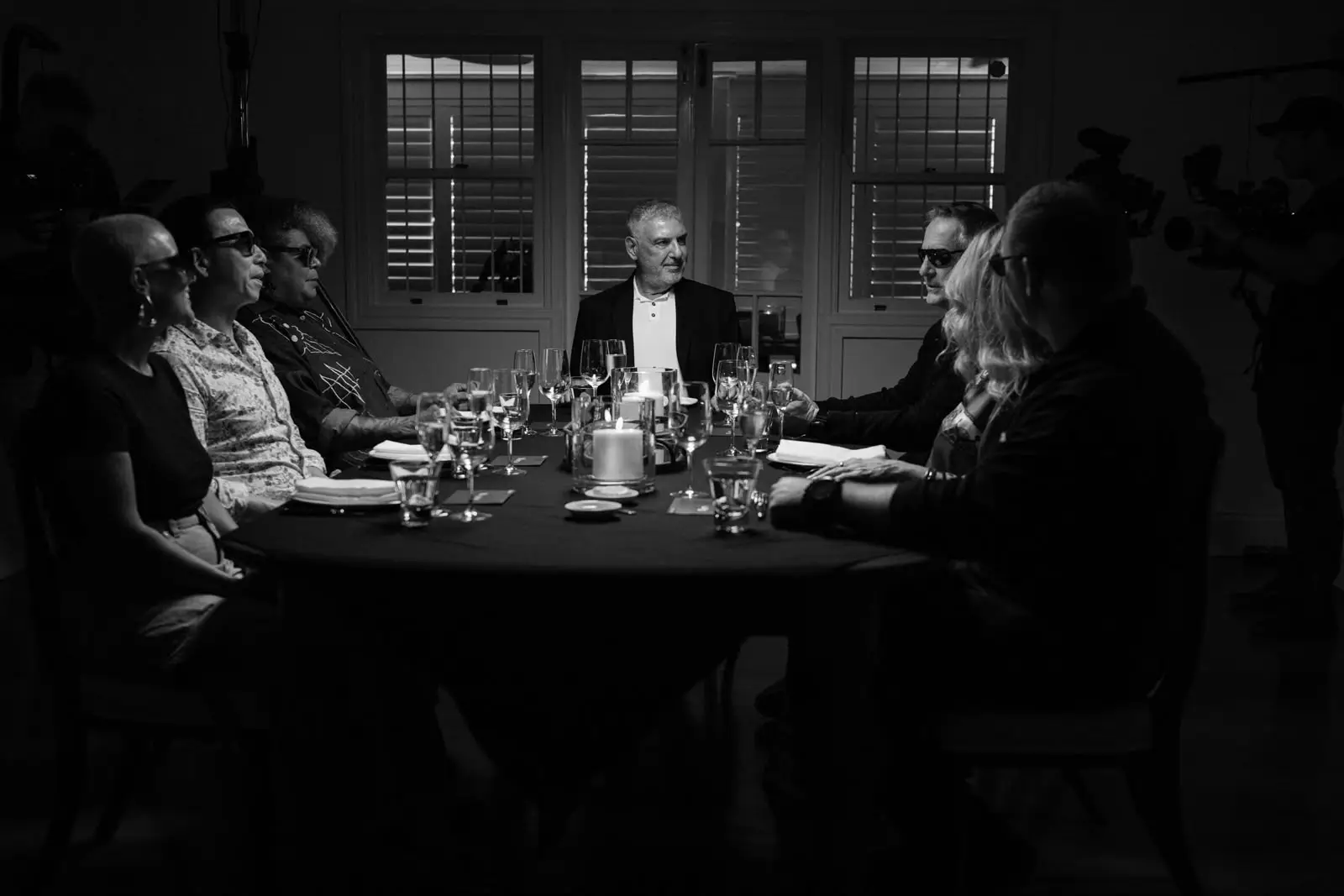
A soul-first cultural ritual. Part cinematic dinner party. Part unscripted drama. Part modern myth in the making. Inspired by the Japanese philosophy of Ichigo Ichie (一期一会),— a phrase meaning “one time, one meeting” — “each episode captures six strangers. in a fleeting moment that can never be repeated. The food is exquisite. The setting is intimate. But the true experience lies in the human encounter. A guest chef prepares the meal — sometimes famous, sometimes unsung — always in service of something far deeper than cuisine. This isn’t about food. It’s about what happens when bread is broken — and walls come down.

Beginnings
Steve George Makris, creator of The Seventh Seat®, began at 17 in Australian fashion, working behind the scenes in design and production. His path, always driven by instinct, not a rigid plan, spanned fashion, interiors, hospitality, and property.
A Life on the Road
In the late ’90s, he founded Farfetched, sourcing handmade homewares from all corners of the world. Years on the road immersed him in craftsmanship and untold stories—collecting narratives as much as objects.
Movement and Energy
Steve’s journey was never linear: peaks, resets, pauses. He grew up around family-owned bars, clubs, and nightclubs, which later evolved into his own popular hospitality ventures. These experiences shaped his deep understanding of spaces, how people gather, how energy flows, and how stories unfold when the environment is just right.
Inner Teachings
Throughout his life, Steve has lived in remote Australian bushland, Indigenous communities, sacred Amazonian lands, monasteries in Mount Athos, and ashrams across India. He sought out quiet teachers, elders, monks, and shamans, learning not from textbooks but from lived experience. These moments rewired how he listened, how he observed, and how he holds space for others.
The Solitude That Sparked It All
By 2021, Steve stepped back and embarked on a solo 4WD odyssey across Australia’s remotest corners. In solitude, under vast skies, on forgotten roads, he reconnected with himself. Through journaling, The Seventh Seat crystallised: a space for extraordinary stories outside the headlines—voices absent from books or media.
From One Seat to Another
The 8th Voice naturally flows from The Seventh Seat. It is not separate—it is the continuation of the conversation, a space where the stories live on, echo, and reach wider audiences. Together, they form one experience: being fully present, listening deeply, and holding space for the stories that shape us.

Steve George Makris
Acknowledgement of Country
I acknowledge the Traditional Custodians of the lands where I have lived, travelled, and worked across Australia. I pay my deepest respects to Elders past, present, and emerging, and I recognise their enduring connection to Country, culture, and spirit. Sovereignty was never ceded.
I also honour the Indigenous and ancestral communities I’ve been privileged to encounter around the world — from the Amazon to India, and in remote mountain regions. I am profoundly grateful to the Elders, spiritual custodians, and everyday guides who welcomed me into their spaces and generously shared their wisdom.

One encounter, one opportunity. Treasure every moment, for it will never occur again in the same way.